

AI in 2025: The Technologies Reshaping Our Future represents a pivotal convergence of machine learning, automation, and advanced analytics that is fundamentally transforming how we work, compete, and innovate across every major industry—from healthcare and finance to education and national security.
Picture this: you wake up on a Tuesday morning in 2025, and before you’ve even made coffee, AI has already optimized your calendar, flagged the three emails that actually matter, and suggested a route to work that avoids an accident that hasn’t happened yet. Sounds like science fiction? It’s just Tuesday.
The truth is, we’re living through a technological shift so profound that “disruptive” feels like an understatement. AI in 2025: The Technologies Reshaping Our Future isn’t just about smarter algorithms—it’s about a complete reimagining of how industries operate, how governments compete, and how humans find their place in an increasingly automated world.
What makes 2025 different from, say, 2020? The technology has moved beyond experimental pilot programs into full-scale deployment. We’re past the “wow, look what AI can do” phase and deep into the “wait, AI is doing what now?” territory.
Let’s break it down…
What Is AI in 2025: The Technologies Reshaping Our Future
At its core, AI in 2025 represents the maturation of artificial intelligence from a promising technology into an essential infrastructure. Think of it less like a fancy tool and more like electricity—something so fundamental that its absence would be unthinkable.
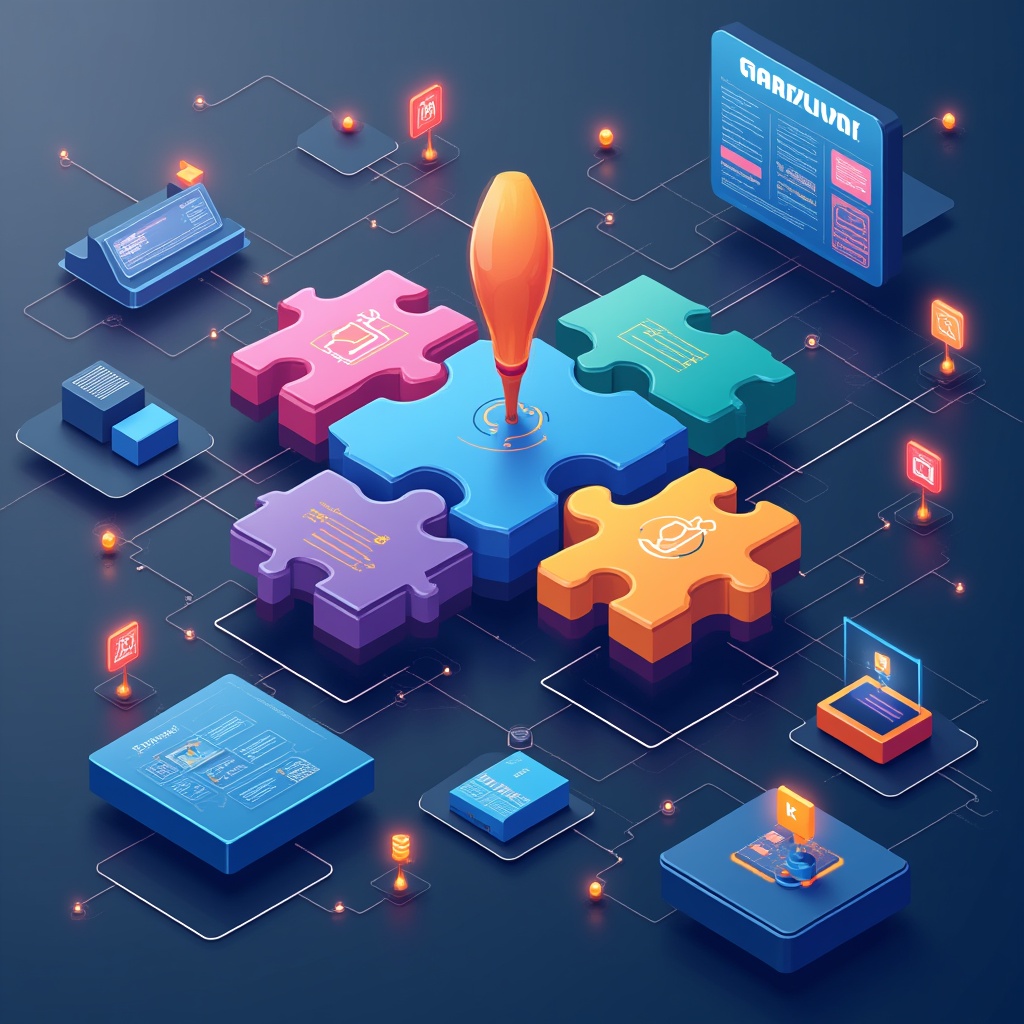
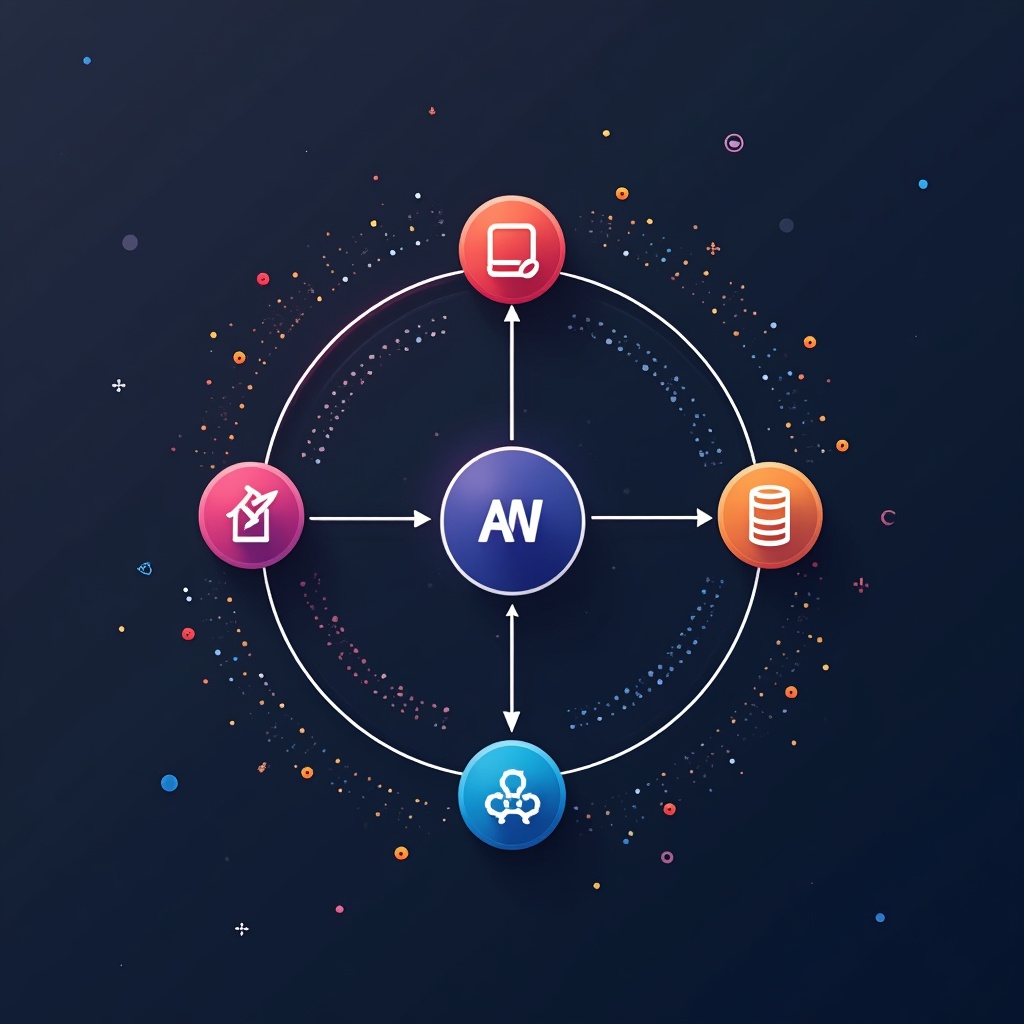
The defining characteristic? Integration. Unlike earlier iterations where AI lived in isolated applications, today’s systems weave together machine learning, natural language processing, computer vision, and predictive analytics into unified platforms. These aren’t standalone party tricks; they’re interconnected ecosystems.
Here’s what that actually looks like:
- Generative AI that doesn’t just answer questions but creates entire reports, designs, and strategies
- Autonomous systems managing supply chains with minimal human oversight
- Predictive models that anticipate market shifts, health crises, and security threats before they materialize
- Adaptive learning platforms that personalize education and training in real-time
McKinsey’s research identified thirteen critical technology trends for 2025, with AI functioning as the cornerstone—the foundation upon which everything else builds. The European Union launched its comprehensive “AI Continent Action Plan,” while the United States framed AI leadership as a “national security imperative” in its July 2025 action plan.
Translation? Governments aren’t treating this as optional anymore. Neither are businesses, universities, or anyone who wants to remain competitive.
The Fourth Industrial Revolution Gets Real
We’ve been hearing about the “Fourth Industrial Revolution” for years, but 2025 is when theory became practice. AI doesn’t work alone—it amplifies other technologies in a kind of exponential feedback loop.
Combine AI with:
- Big data analytics: Suddenly patterns emerge from noise that humans could never spot
- Automation: Robots don’t just follow scripts; they adapt and improve
- Internet of Things: Millions of connected devices feeding intelligence into systems that learn continuously
- Quantum computing: Processing power that makes today’s supercomputers look like calculators
The result? A technological ecosystem where improvements in one area accelerate progress in all the others. It’s kinda like watching compound interest, except instead of money, it’s capability that’s doubling.
Why AI in 2025 Matters More Than Ever
Alright, so AI is everywhere. But why should you care beyond the cool factor?
Because AI in 2025: The Technologies Reshaping Our Future isn’t reshaping abstract concepts—it’s reshaping your job, your industry, your economic security, and possibly your country’s geopolitical standing. That’s not hyperbole; that’s Monday morning reality.
Economic Competitiveness Isn’t Optional
Countries and companies that master AI integration are pulling ahead so fast that the gap is becoming difficult to close. The IMF’s “Gen-AI: Artificial Intelligence and the Future of Work” report documented this divergence with uncomfortable clarity.
Think of it like the early internet era. Companies that dismissed e-commerce in 1998 mostly don’t exist anymore. The AI gap works the same way, just faster and with higher stakes.
For more background on how automation is transforming business processes, check McKinsey’s latest technology trends analysis.
The Jobs Conversation Gets Complicated
Let’s not dance around it: AI is eliminating certain types of work. The “Future of Jobs Report 2025” found that entry-level positions are particularly vulnerable as AI systems assume tasks that traditionally belonged to junior employees.
But here’s where it gets nuanced. AI isn’t just destroying jobs—it’s fundamentally changing what work means. Tasks disappear, but new roles emerge. The challenge? The new roles require different skills, and the transition isn’t automatic or painless.
That’s why institutions like Wayne State University dedicated their entire 2025-26 academic theme to “AI in Action,” and why the “AI Skills Academy” launched to address the urgent reskilling crisis. This isn’t theoretical anymore; it’s survival.
Learn more in Best Workflow Management Software: 10 Top Solutions.
National Security Enters the Chat
When the United States explicitly calls AI leadership a national security imperative, you know we’ve moved beyond business strategy into geopolitical competition. AI capabilities now determine:
- Military superiority and defense capabilities
- Intelligence gathering and cyber warfare effectiveness
- Economic resilience and supply chain security
- Infrastructure protection and crisis response
Countries are racing not just to develop AI, but to develop it first and better. That competitive pressure is driving unprecedented investment and innovation—and also raising some uncomfortable ethical questions we’ll get to in a minute.
How AI Technologies Work Together in 2025
Here’s the simple version: modern AI isn’t one thing. It’s a stack of interconnected technologies that become exponentially more powerful when combined.
The Core Technologies
1. Machine Learning & Deep Learning
These systems learn from data without being explicitly programmed. Feed them examples, and they identify patterns, make predictions, and improve over time. In 2025, these models have become sophisticated enough to handle nuanced tasks that require context and judgment.
2. Natural Language Processing (NLP)
This is why you can now have actual conversations with AI systems instead of typing rigid commands. NLP allows machines to understand, interpret, and generate human language with remarkable accuracy. The chatbot you’re arguing with? It genuinely understands your frustration—even if it can’t quite fix your billing problem.
3. Computer Vision
AI systems can now “see” and interpret visual information better than humans in many contexts. Medical imaging diagnosis, quality control in manufacturing, autonomous vehicle navigation—all powered by computer vision that processes images in milliseconds.
4. Generative AI
Unlike earlier AI that could only analyze existing information, generative systems create new content—text, images, music, code, even strategic plans. This is the technology causing both excitement and existential dread across creative industries.
The Integration Magic
Individually, these technologies are impressive. Combined, they’re transformative. A healthcare system in 2025 might use:
- Computer vision to analyze medical images
- Machine learning to predict patient outcomes
- NLP to document encounters and communicate with patients
- Generative AI to suggest personalized treatment plans
All working together, in real-time, learning from every interaction. That’s the 2025 difference—AI systems that collaborate rather than operate in silos.
If you’re looking to automate social media alongside other workflows, explore Meta Automation: Streamlining Social Media Management.
Common Myths About AI in 2025
Let’s bust some misconceptions, because there’s a lot of noise out there and separating signal from panic is getting harder.
Myth #1: “AI Will Replace All Human Workers”
Reality: AI is displacing specific tasks, not entire professions. Yes, some jobs are disappearing, but new roles are emerging faster than many realize. The issue isn’t that humans become obsolete—it’s that the skills required are shifting rapidly, and retraining isn’t keeping pace.
Think of it like the shift from horses to cars. Blacksmiths had a rough transition, but mechanics, traffic engineers, and automotive designers found plenty of work. The question isn’t “will there be jobs?” but “will there be a smooth transition for the people currently employed?”
Myth #2: “AI Systems Are Perfectly Objective”
Reality: AI systems inherit the biases present in their training data and design choices. If you train an AI on historical hiring data that reflects discriminatory patterns, guess what? Your AI perpetuates those patterns—just faster and at scale.
The 2025 conversation has shifted from “can AI be biased?” (yes, obviously) to “how do we audit, correct, and govern these systems?” It’s a harder question with messier answers.
Myth #3: “You Need to Be a Programmer to Use AI”
Reality: The democratization of AI is one of 2025’s defining trends. No-code platforms, natural language interfaces, and intuitive tools mean non-technical users can deploy sophisticated AI solutions. The bottleneck isn’t technical skill—it’s understanding when and how to apply AI effectively.
Myth #4: “AI Will Achieve General Intelligence Soon”
Reality: Despite breathless headlines, we’re nowhere near artificial general intelligence (AGI)—AI that matches human cognitive flexibility across all domains. Current systems excel at specific, narrow tasks but lack genuine understanding, common sense, or the ability to transfer knowledge between unrelated domains.
The AI you interact with in 2025 is incredibly powerful within its training scope but spectacularly clueless outside it. That’s not gonna change next Tuesday.
Real-World AI Applications Reshaping Industries
Abstract discussions are fine, but let’s get concrete. How is AI actually transforming specific sectors right now?
Healthcare: From Reactive to Predictive
AI systems now predict patient deterioration hours before traditional clinical signs appear. They identify cancer in imaging studies with accuracy exceeding expert radiologists. Drug discovery that once took a decade now happens in months.
But here’s the interesting part: AI isn’t replacing doctors. Instead, it’s handling the pattern-recognition heavy lifting while physicians focus on patient relationships, ethical decisions, and complex cases that require human judgment.
Finance: Risk Management Gets Sophisticated
Financial institutions use AI to detect fraud in real-time, assess creditworthiness with factors traditional models miss, and execute trades at speeds measured in microseconds. The 2025 financial landscape is essentially an AI arms race—institutions without advanced systems simply can’t compete.
Algorithmic trading isn’t new, but the sophistication level is. Modern systems don’t just follow rules; they adapt strategies based on market conditions, news sentiment, and patterns invisible to human traders.
Education: Personalization at Scale
The “one-size-fits-all” classroom model is breaking down. AI-powered platforms adapt in real-time to each student’s learning pace, style, and knowledge gaps. A struggling student gets additional support automatically; an advanced student receives challenges that prevent boredom.
Critics worry about reduced human interaction, and they’re not entirely wrong. The challenge is balancing AI’s efficiency with the irreplaceable value of human mentorship and social learning. Neither extreme—pure automation or pure traditional methods—works optimally.
Manufacturing: Smart Factories Emerge
Modern manufacturing facilities use AI for predictive maintenance (fixing equipment before it breaks), quality control (catching defects humans would miss), and supply chain optimization (anticipating disruptions and adjusting automatically).
The result? Factories that learn and improve continuously, with downtime and waste dropping to levels that seemed impossible five years ago.
Space Technology: AI Reaches for the Stars
The Davos 2025 session highlighted twelve transformative space technologies, many powered by AI. Autonomous spacecraft navigation, satellite data analysis, and even the search for extraterrestrial life increasingly depend on AI systems that can process vast amounts of data and make split-second decisions without waiting for human input.
This convergence of AI and space tech suggests a future where exploration happens at a pace human-only missions could never achieve.
Strategic Responses: How Leaders Are Adapting
Recognition of AI’s importance is nearly universal. What separates successful organizations from struggling ones isn’t awareness—it’s execution.
Government Frameworks and Competition
National AI strategies reveal fascinating differences in approach. The U.S. frames AI primarily through the lens of security and economic dominance. Europe emphasizes ethical frameworks and citizen protection. China focuses on comprehensive integration across all sectors.
None of these approaches is obviously “correct,” but their differences will shape global AI development for decades. We’re watching different governance philosophies compete in real-time, and the outcomes aren’t predetermined.
Corporate Implementation Strategies
Events like eMerge Americas showcase how businesses are moving beyond pilot programs into full-scale deployment. The conversation has shifted from “should we use AI?” to “how do we integrate AI across every function?”
Smart organizations approach this systematically:
- Audit current processes to identify high-impact AI opportunities
- Invest in infrastructure that supports AI integration (data pipelines, computing resources)
- Reskill workforce proactively rather than reactively
- Establish governance frameworks before problems emerge
- Start with narrow applications and expand as capabilities mature
The companies treating AI as an IT project are struggling. Those treating it as a fundamental business transformation are thriving.
Educational Institution Adaptation
Universities face a particularly interesting challenge: preparing students for jobs that don’t exist yet while many current faculty lack AI expertise themselves. The “Shaping the Future” conference (November 2025) brought together academia and industry specifically to address this gap.
Forward-thinking institutions are:
- Embedding AI literacy across all disciplines, not just computer science
- Teaching critical thinking about AI ethics and societal impacts
- Creating experiential learning opportunities with real AI systems
- Partnering with industry for curriculum development and student placement
The goal isn’t to make every graduate a machine learning engineer—it’s to ensure everyone understands how to work with AI effectively.
The Challenges Nobody Wants to Talk About (But We Should)
Let’s pause for a sec and acknowledge the uncomfortable truths. AI’s advancement isn’t an unmitigated good, and pretending otherwise does nobody any favors.
Employment Displacement Is Real and Painful
Economic statistics about “new jobs created” don’t help the 50-year-old accountant whose specialized skills just became obsolete. The “transition period” is a euphemism for genuine human suffering when careers disappear faster than retraining programs can address.
Solutions exist—universal basic income, robust retraining programs, earlier career transitions—but implementing them requires political will and societal consensus we haven’t achieved yet.
The Ethics Get Messier
Who’s responsible when an AI system makes a consequential mistake? How do we ensure AI benefits are distributed equitably? What happens when AI-powered surveillance becomes too effective? When does automation cross the line from helpful to dehumanizing?
These aren’t abstract philosophy questions—they’re practical governance challenges demanding answers right now. The fact that we’re still debating rather than implementing solutions is telling.
The Concentration of Power Accelerates
Advanced AI requires enormous computing resources, vast datasets, and specialized expertise. This naturally concentrates capability in a small number of organizations and nations. That concentration raises questions about monopoly power, democratic governance, and whether we’re comfortable with such critical technology controlled by so few.
Security Vulnerabilities Multiply
AI systems introduce new attack vectors. Adversarial examples can fool image recognition. Prompt injection can manipulate language models. As we depend more heavily on AI, the consequences of compromised systems become more severe.
Plus, AI significantly lowers the barrier for sophisticated cyberattacks, enabling smaller actors to punch above their weight. The offense-defense balance in cybersecurity is shifting, and not in defenders’ favor.
What’s Next? Looking Beyond 2025
If the current trajectory holds—and all signs suggest it will accelerate—the next few years bring even more profound changes.
Near-Term Developments (2026-2028)
Expect AI systems that:
- Handle complex multi-